
THE MEANING OF FEAR is now available for pre-order
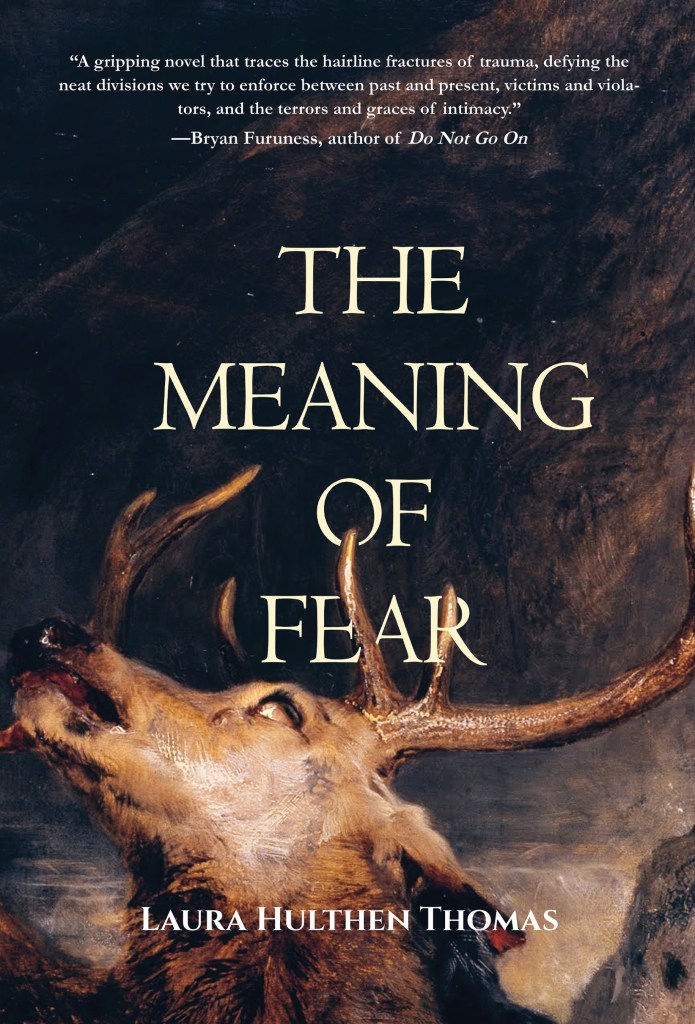
The Meaning of Fear
About THE MEANING OF FEAR (Release Date: 3.24.2026)
Amid the turmoil of the 2008 recession that threatens her career, Lea Johnson, a behavioral researcher dedicated to curing post-traumatic stress disorder, is also struggling to save her marriage. When her husband, Jay, is brutally attacked during an attempted robbery, Lea is shaken to realize that being an expert in fear doesn’t make her an expert in healing her own husband’s trauma. Things take a dark turn when Jay confronts a young trespasser outside their home, only for the boy to be reported missing shortly after. Lea begins to suspect Jay is hiding something, and as she feels a growing attraction to the sympathetic cop investigating the case, she’s torn between loyalty to her husband and the urge to uncover the truth. When an unexpected opportunity arises for Lea to confront her own childhood assailant, the lines between healing, revenge, and forgiveness blur. In a battle with her past and her husband’s potential secrets, Lea must decide whether her affair will be the catalyst for healing or the final fracture in a marriage already on the brink.
The Meaning of Fear is a deeply emotional exploration of fear, love and the possibility of redemption, as Lea confronts the complex interplay of trauma, trust, and forgiveness.
Praise for THE MEANING OF FEAR:
“As its title suggests, The Meaning of Fear explores through precisely drawn and utterly believable characters the many ways fear shapes us: through brutality, abuse, neglect, and betrayal. As a result of their past traumas, Lea and Rilke are complicated people, both victims and aggressors straining to find balance and happiness even as their thoughts and behaviors are inspired by past wounds. We walk a tightrope beside these characters, deciphering actual reality from one filtered through their trauma in a masterfully delivered novel of suspense. Will they betray in a learned and potent response to fear? Will they exact revenge on their abusers? Will they forgive and move forward? Thomas’s skill in drawing memorable parallels between past and present events, places, and conflicts results in an intricate and satisfying story that drives forward with clarity and ingenuity. This book is literally novel; you will never read another one like it.” —Dorene O’Brien, award-wining author of What It Might Feel Like to Hope
“When forests become farms and farms become housing developments, wildness and violence, we’re reminded, remain.” – Susan Neville, award-winning author of The Town of Whispering Dolls
“What a bold, wise writer! I am in love with Laura Thomas’ luminous, empathetic worldview. I was utterly enthralled by The Meaning of Fear, a remarkable feat of characterization.” – Kelly Fordon, award-winning author of I Have the Answer
Pre-order THE MEANING OF FEAR here:

States of Motion
About STATES OF MOTION, a Foreword INDIES Book Awards Finalist
Set in Michigan small towns both real and fictional, the eight stories in States of Motion follow tough, quixotic characters struggling to reinvent themselves even as they cling to what they’ve lost. A grieving father embraces his town’s suspicions of him as the sole suspect in his daughter’s disappearance. A driving instructor struggles to care for his abusive mother between training lessons with two flirtatious teens. A behavioral researcher studying the fear response must face her own fears when her childhood attacker returns to ask for her forgiveness. Conditioned by their traumatic pasts to be both sympathetic and numb to suffering, the characters in these stories clutch at a chance to find peace on the other side of terror. From the isolated roadways of Michigan’s countryside to the research labs of a major university, the way forward is both one last hope and a deep-seated fear.
The profoundly emotional stories in States of Motion will interest any reader of contemporary literary fiction.
Praise for STATES OF MOTION:
“Laura Hulthen Thomas ruminates on the harried and heartbreaking minutiae of everyday people in her riveting short-story collection, States of Motion. These eight tales take the seemingly familiar and subvert it, revealing the discord that aggression and sexual trauma can cause. Set in a series of small Michigan towns, each of Thomas’s stories brims with emotional nuance and a sense of grief. Loss is a key theme, as both major and minor characters grapple with how to keep on living after their lives have faced some kind of upheaval…Personal yet universal, complex yet straightforward, the stories in States of Motion represent the innumerable ways in which entropy can set in when the familiar has been stripped away.” —Foreword Review
Buy STATES OF MOTION here:

Ghost Writers
About GHOST WRITERS: US HAUNTING THEM (contributor)
For Ghost Writers: Us Haunting Them, editors Keith Taylor and Laura Kasischke asked twelve celebrated Michigan writers to submit new stories on one subject: ghosts. The resulting collection is a satisfying mix of tales by some of the state’s most well-known and award-winning writers. Some of the pieces are true stories written by non-believers, while others are clearly fiction and can be funny, bittersweet, spooky, or sinister. All share Michigan as a setting, bringing history and a sense of place to the eerie collection. Ghosts in these stories have a wide range of motivations and cause a variety of consequences. In some cases, they seem to dwell in one person’s consciousness, as in Steve Amick’s “Not Even Lions and Tigers,” and other times they demonstrate their presence with tangible evidence, as in Laura Hulthen Thomas’s “Bones on Bois Blanc.”
Praise for GHOST WRITERS:
“Looking for trouble in familiar places? I suggest you curl up with this contemporary literary guide to Michigan ghosts, in which some of our state’s finest poets and storytellers will carry you to burial grounds, haunted lighthouses, disorienting museums, mansions with secret passageways, and farmhouses visited by those long dead. These stories unite the urban and the rural, the funny and the grim, by allowing a reader a glimpse below the surface.” ―Bonnie Jo Campbell
Buy GHOST WRITERS here:
 Laura Hulthen Thomas